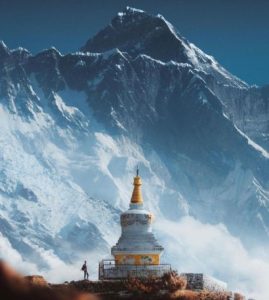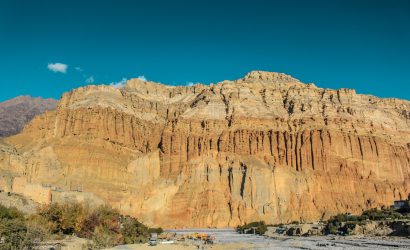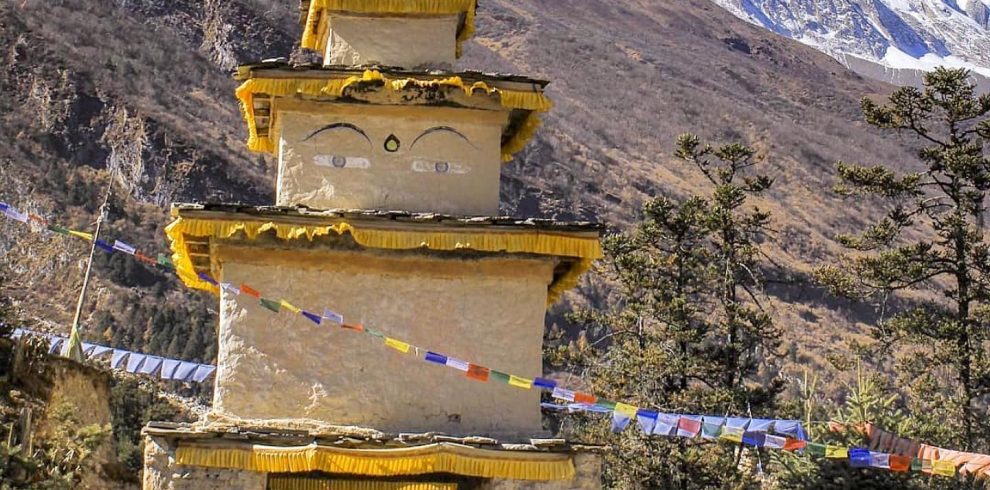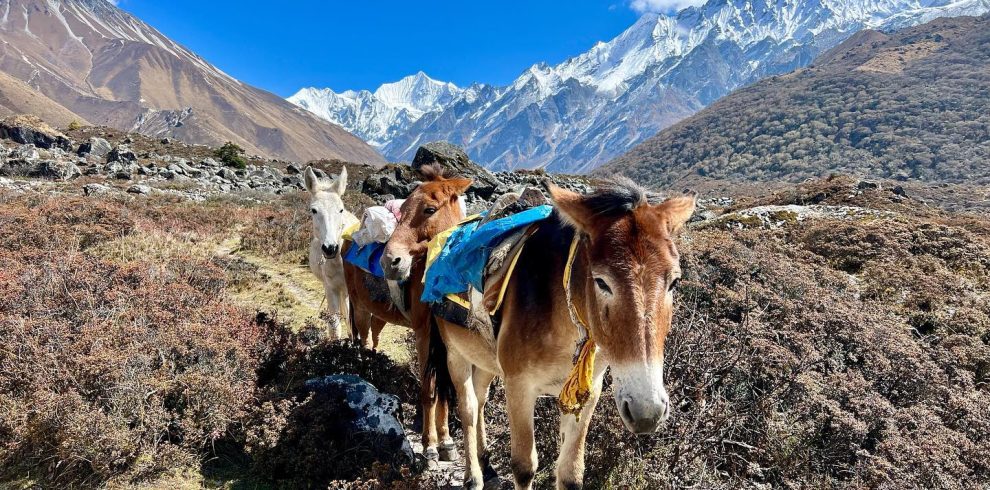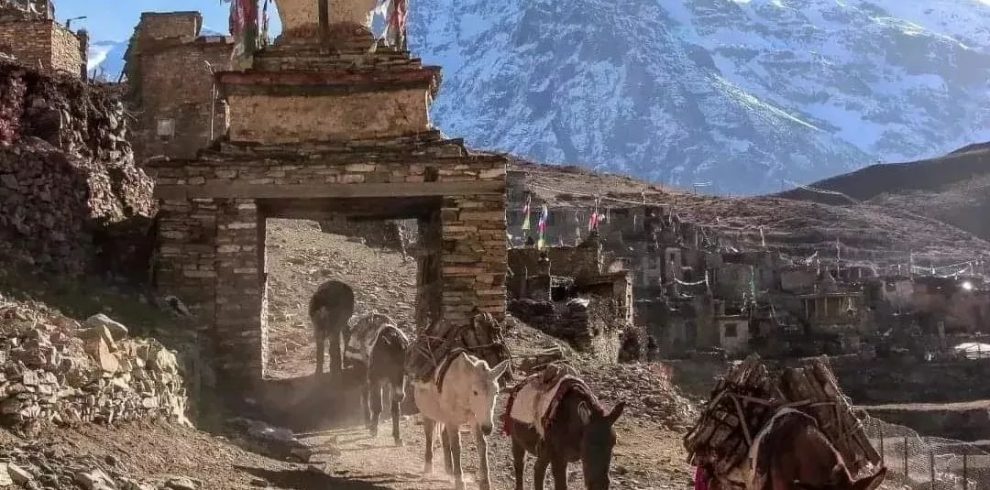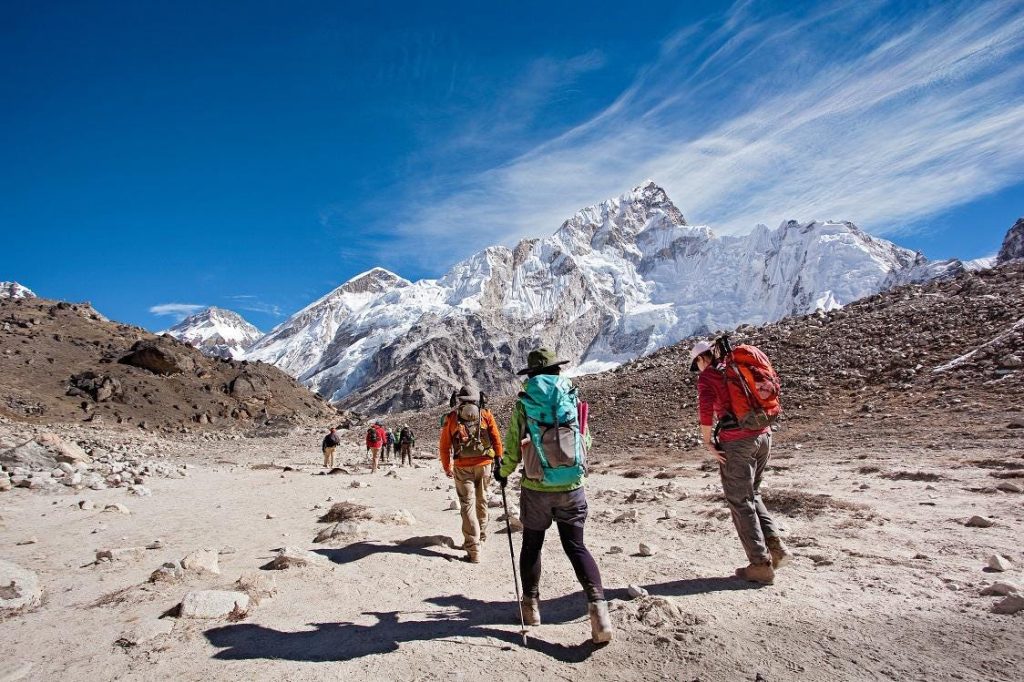
Everest Base Camp Trek is one of the popular trekking routes among hikers around the globe. The EBC trek is an overall package of satisfying and convenient journeys to the Everest region, located at a height of roughly 5365 meters. The region is well known for its beautiful natural ambiance and the warm, culturally welcoming hospitality of the Sherpa community. This trek introduces you to the typical Nepali landform and culture.
The 14-day Everest Base Camp trek includes a panoramic view of many tall and renowned mountain peaks of the world. Some peaks that you get to discover are Pumori, Lhotse, Nuptse, Lobuche, and the mighty Mt. Everest as well.
The trek begins and ends in Lukla and reaching there is the first part of the journey. Lukla is a 35-minute flight from Kathmandu, where you are first received. This part can be twisted, and alternatively, we can choose a mesmerizing road journey of about 5 to 6 hours to reach Manthali in Ramchhap district in the hills and further a 20-minute flight to Lukla from Ramechhap.
The trek starts along the banks of the Dudhkoshi River, passing through Sagarmatha National Park on the way to Namche Bazar. Namche here is the main Gateway to the Everest Region. This is the cultural heart of the region The heartfelt hospitality is probably a major boost in energy for further journey. The Sherpa community here are indeed well-known for its hospitality. Their culture is also one to look out for and the journey gives an immense opportunity to fill in their shoes of lifestyle. This place is also popularly known for acclimatization and getting used to the new climatic conditions. Probably the best place to get yourself ready for the challenging trek.
We depart Namche Bazar after a day and move towards Tengboche. The Tengboche monastery here is renowned for its soothing vibe. Continuing our journey, we move towards Dingboche and eventually to Lobuche. During this journey, we get an amazing view of Mt peaks like Lhotse, Nuptse, Makalu, Cho Oyu, and Amadablam which indeed boosts the energy further more.
Further, we continue our walk to Gorakshep, from where we hike alongside the world’s deepest glacier, The Khumbu Glacier. The glacier can be viewed on reaching the Everest Base Camp. After a while, we returned back that day to Gorak Shep and spent the night there.
The following day we hike to Kala Pathhar, where we can see the sunrise over the mighty Mt. Everest. This is an important part as we have a proper view of Mt Everest from this place comparatively from the Everest Base Camp as well. This brings up a pure taste for those wanting to see Mt Everest and have the perfect gaze into it. After spending some quality time there, we return back to Gorakh Shep we further descend towards Pheriche village.
We return to Tengboche through the lush forest of rhododendron and further reach Namche. Coming back to Lukla and returning through flight to Kathmandu The EBC trek is concluded.
The adventure of all this experience is worth a visit and returning from there indeed fills the soul and body with pure positivity and memories for a lifetime.
Everest Base Camp Trek Highlights:
- Soothing aerial experience of the flight from Kathmandu to Lukla.
- Discover the Himalayan culture and lifestyle from within.
- The best-opted view of the mountain ranges from the literal top of the world.
- Soulful views of some of the world-famous mountains like Mt. Everest, Amadablam, Lhotse, Nuptse, Thamseku, Choyu, and many more.
- Mesmerizing experience in one of the best natural ambiance in the world.
Outline itinerary of Everest Base Camp Trek
- Day 1: Arrival at Tribhuwan International Airport in Kathmandu, the capital city of Nepal. Overnight in Kathmandu. ( 1400 Metres )
- Day 2: Early morning drive towards Ramechap and 20 min fly towards Lukla. Hike from Lukla to Phakding. Overnight stay in Phakding.
- Day 3: Another scenic day trek towards Namche Bazar. Explore the local market in the evening and overnight in Namche. (3440 Metres)
- Day 4: Hotel Everest View at altitude of (3880 metres )and return back to Namche meters) for an overnight stay at a guesthouse.
- Day 5: Trek to Tengboche (3860 m) from Namche Bazar staying overnight there.
- Day 6: Trek to Dingboche (4410 m) for 5 to 6 hours and stay overnight there.
- Day 7: Acclimatization day, Hike to Nangkarstang Peak (5083 m) for about 5 to 6 hours and stay overnight in a guesthouse.
- Day 8: Trek to Lobuche at 4910m altitude from the sea level for about 6 hours and stay overnight there.
- Day 9: Trek to Everest Base Camp (5365 m) and back to Gorak shep(5190m) and stay overnight in a guesthouse.
- Day 10: Early morning hike to Kala Patthar (5555 m) and descend to Pheriche (4240m) staying there overnight.
- Day 11: Trek back to Namche Bazaar (3440 m) from Pheriche with the hike of about 7 to 8 hours staying there overnight.
- Day 12: Trek to Lukla (2840 ) from Namche Bazaar staying overnight there.
- Day 13: 35 minutes Flight back to Kathmandu from Lukla or 20 minute flight to Manthali in Ramechhap district further driving for around 6 hours through the road. Lastly staying at Hotel in Kathmandu overnight.
- Day 14: Transfer to Tribhuwan International Airport for final departure.
Detailed Itinerary of the EBC trek
Day 01: Arrival at Tribhuwan International Airport in Kathmandu and transfer to hotel (maximum altitude: 1400 meters)
On your arrival at Tribhuwan International Airport, youll be received by a representative and get escorted to a hotel. During this stay,, you’ll be guided about all the details of the whole journey. All your queries and concerns will be cleared out and elaborated further. These meetings also ensure about the documents and permits required which further eases the Formality and legal proceedings.
Day 2: Flight from Kathmandu to Lukla or Drive from Kathmandu to Manthali and flight to Lukla (Max altitude: 2840 meters)
On the second day of this trek, we are destined to reach Lukla for an overnight stay after Phakding. For this, we have two alternatives. Either we choose a straight flight from Kathmandu to Lukla for 35 minutes or Drive to Manthali for 6 hours and then take a 20-minute flight to Lukla depending on the season you arrive.
The straight flight to Lukla from Kathmandu is suited for January, February, June, July, August, September, and December whereas the flight from Manthali to Lukla is mainly suited for peak season due to air traffic expansion in the month of March, April, May, October and November.
Major thing to remember here is the flights are influenced by the number of travellers and we must be flexible to suit the conditions.
After reaching Lukla we hike for about 3 to 4 hours to Phakding(2610 metres) staying there overnight in a guest house.
Day 3: Trek to Namche Bazaar from Phakding (Max altitude: Namche Bazaar 3440 meters)
After Breakfast, we follow the trails of Dudh Koshi River passing through Sagarmatha National Park. We have some steep climbs ahead. During this phase, we require an entry permit to enter the Everest Region.
After 4 to 5 hours of trekking around some of the majestic and eye-catching ambiance of the Himalayas, we reach this beautiful Sherpa town called Namche Bazaar. This is indeed the entry point for the Everest region and one of the most lively places to be in. The Sherpa people are known for their great Hospitality and the culture they possess is one of the highlights of this journey.
We can just roam around this cheerful town just getting to know this immensely beautiful culture these people possess. The time passes here like nothing and we stay here overnight in a Guesthouse.
Day 4: Acclimatisation day at Namche and hike to Hotel Everest View and Back (Max. Altitude: Hotel Everest View 3880 meters)
The initial Acclimatisation day of this trek is scheduled at Namche Bazaar and here on this day you have plenty to get yourself occupied, You can visit local people and indulge in their culture. We visit the Sherpa Cultural Museum and witness their rich culture and tradition. Namche Bazaar is a lively town in the Himalayas and here we can buy any of the stuff that we miss and might need for our journey like trekking gear.
On this day we hike to the hotel at the highest altitude in the world, Hotel Everest View. One of the best places to gaze at the Himalayas. Here, you have a view of some of the most famous mountain peaks in the world, Mt. Amadablam, Lhotse, Nuptse, and many more.
After 4 to 5 hours of trek, we return back the Namche bazaar and stay overnight in a guesthouse.
Day 5: Trek to Tengboche from Namche Bazaar (Max. Altitude: Tengboche 3860 metres)
Continuing the journey the next day we pass through some rocky trails towards Tengboche. The path is downhill in the beginning and ends with a steep climb to Tengboche. The path feels more decorated with the rhododendron flowers around. After hiking for 2 hours, you come to the point where you can split the journey towards the Gokyo Lake Trek, however, we will hike towards Everest Base Camp. The view around is more scenic as we get to gaze at all the mountain peaks, glaciers, and rivers. On this day visit the famous Tengboche Monastery and watch the monks do prayers either in the morning or evening time staying there overnight.
Day 6: Trek to Dingboche from Tengboche (Max. Altitude: Dingboche 4410 metres)
Continuing the journey the next morning we move towards Dingboche through the alpine forest and some of the majestic views available in the region along the trails of Imja Valley we ascend in the end to Dingboche after trekking for 5 to 6 hours.
Day 7: Acclimatisation day, hike to Nangkartsang Peak and back (Max. Altitude: Nangkartsang Peak 5083 metres)
This is our second rest day as we stay in Dingboche. On this day we head towards Nangkartsang Peak and return to Dingboche with a hike for 4 to 5 hours. The view from this peak is mesmerizing and worth spending our time. The place has the best perspective view of Mt Amadablam and the Landscape around only to return and rest in the teahouse.
Day 8: Trek from Dingboche to Lobuche (Max altitude: Lobuche 4910 meters)
We trek for around 5 to 6 hours towards Lobuche on this day. During this walk, we can see various landscapes and some stone memorials constructed in the memories of the departed souls who lost their lives during their journey. At the end of the day’s trek, we reach the village of Lobuche. At the day’s end, we can see many more mountain ranges from this beautiful small village.
Day 9: Trek to Gorak Shep, Everest Base Camp, and back to Gorakshep (Max Altitude: Everest Base Camp 5364 meters)
On this day we first travel along the Khumbu Glacier towards the village of Gorak Shep gazing at the beautiful view of Mt. Nuptse. On reaching Gorak Shep we further move towards Everest Base Camp. This trail is considerably challenging for all the trekkers but alongside the challenges, the view of Khumbu Glacier and many more mountain peaks are indeed a mighty boost to the energy.
On reaching the EBC we are rewarded by the panoramic view of Mt. Everest Mt. Nuptse but more than that it’s an amazing feeling to be under the tallest mountain in the world. During peak season the place is crowded and we get to meet many climbers, and visitors from all around the world. After this amazing experience, we descend back towards Gorak Shep to stay there overnight.
On this day in total, we trek for around 8 to 9 hours.
Day 10: Hike to Kala Patthar and descend to Pheriche (Max Altitude: Kala Patthar 5640 meters)
On this day we hike towards the highest place in the whole trek, Kala Patthar early in the morning to see some of the best sunrise views above the Himalayas. This place can also be important as we get the best view of Mt. Everest from this place is even better than the EBC itself. We trek for around 7 to 8 hours this day to return to Gorak Shep and further to Pheriche enjoying the best possible natural ambiance in the world.
Day 11: Trek to Namche Bazaar from Pheriche (Max Altitude: Namche Bazaar 3440 meters)
Early in the morning after breakfast, we move towards Namche Bazaar taking the routes we had taken earlier through the suspension bridges and forest trails. We hike for around 7 to 8 hours on this day to reach Namche Bazar and rest overnight in a guest house.
Day 12: Trek to Lukla from Namche Bazaar (Max. Altitude: Namche Bazaar 3440 meters)
This is the last trek day as we hike for around 7 to 8 hours towards Lukla leaving the Everest region and taking a wholesome of adventure memories along with you. We rest overnight in Lukla on this day.
Day 13: Journey back to Kathmandu from Lukla
On this day we get back to Kathmandu either from a direct flight from Lukla to Kathmandu or flight to Manthali and then drive for 5 to 6 hours towards Kathmandu depending on the season and month we travel on. After reaching Kathmandu we rest overnight in the hotel, probably trying to take the thoughts of the amazing experience out of your sight for a while.
Day 14: Deported to Tribhuwan International Airport
On this day we get deported back to the international airport in Kathmandu accompanied by their representative and bidding farewell to the 14-day trek of Everest Base Camp. These 14 days are indeed an experience of a lifetime.
Pack-list for the Everest Base Camp Trek
Here is the list of everything you might need and require for the 14-day trek to EBC. The most basic thing we need to remember is that the region we are traveling to is a cold region to be in, therefore warm clothes are a must.
- General
- Four-season (zero-degree) sleeping bag
- Sleeping bag liner
- Puffy down jacket
- Daypack with rain cover
Upper Body
- Sun hat or cap
- Knitted hat/Beanie
- Scarf/Neck Gaiter/Buff
- Headlamp
- Sunglasses
Torso
- Technical fabric base layer (light for warmer months, heavy for colder months)
- Technical fabric short (2) and long sleeve (2) shirts
- Waterproof, windproof shell
- Fleece jacket or pullover
Lower Body
- Technical fabric base layer (light for warmer months, heavy for colder months)
- Hiking pants (2)
- Comfortable pants for inside the teahouses
- Waterproof, windproof shell
- Hiking shorts
Hands
- Wool or technical fabric liner gloves
- Hard-shell outer gloves (insulated for colder months)
Feet
- Wool or technical fabric warm socks
- Hiking socks
- Liner socks (optional such as silk)
- Trekking/hiking boots (waterproof recommended)
- Ice Cleats /Micro Spikes (For trekking from November to March, it’s recommended to include Ice Cleats/ Micro Spikes to prevent slipping on icy or wet surfaces.)
- Casual shoes
- Gaiters (lightweight for dust or heavy for snow in colder months)