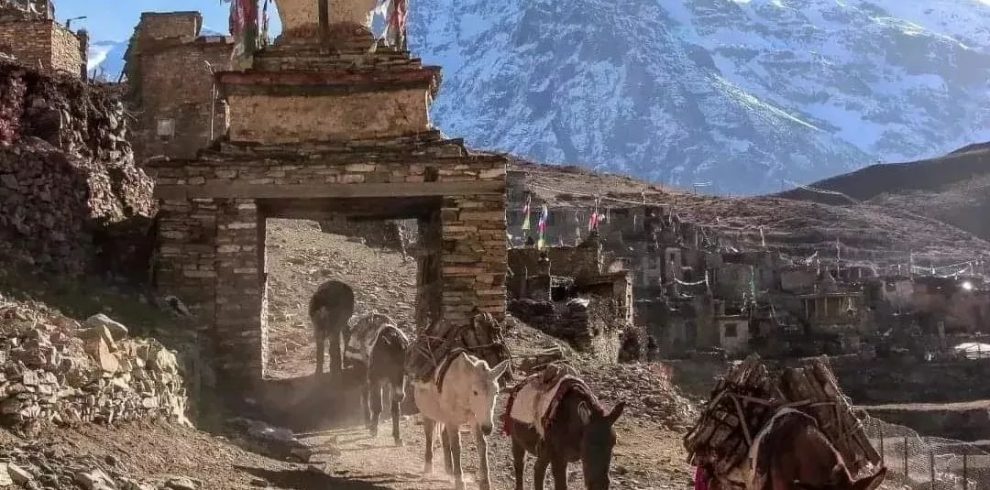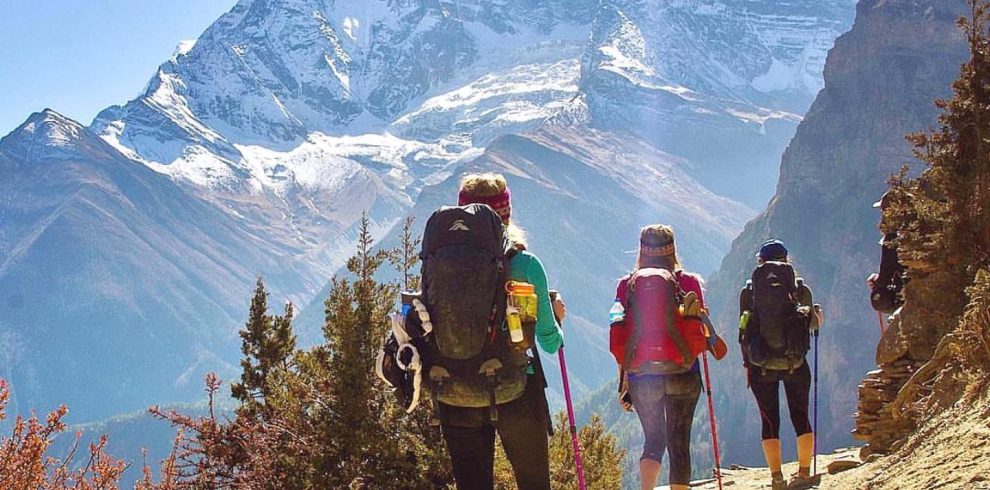
The Annapurna Circuit Trek is an experience encompassing the depths of the Annapurna Massif. This classic route winds through dramatic landscapes, providing breathtaking views of towering peaks, deep gorges, and glaciers. The trekkers will pass through superb villages with staunch Buddhist and Hindu traditions, come across relaxing hot springs, and have the option to view the sunrise over the Himalayas from the famous viewpoint of Poon Hill.
Although the well-worn paths make for a relatively soft and comfortable way of trekking, this is a moderately hard and tiring trek due to high altitude, hence demanding good fitness. This trek is in “tea-house” style, meaning that the trekkers stay in guesthouses rather than camp, therefore eliminating the need to bring heavy gear. Usually going counterclockwise to manage acclimatization, the Annapurna Circuit Trek is one of the most unforgettable treks because of sceneries, cultural immersion, and a humdrum feeling of accomplishment at its end.
The journey begins in Bhulbhule following a beautiful drive from Kathmandu, and the path goes along the Marsyandghi River Valley, passing through Jagat, Dharapani, Chame, and Pisang. You will stay overnight in each of these locations. Below is the Annapurna Circuit trek map for you to view the route you will take.
You will hike to Manang on the sixth day and stay there for a day to acclimatize before crossing Thorong La pass. After adjusting to the altitude in Manang, we proceed along the path towards Yak Kharka and the following day, you will trek to Thorong Phedi where you will stay overnight.
On your ninth day, you will depart from Thorong Phedi and hike towards Muktinath, marking the day you will traverse Thorong La Pass (5,416m/17,769ft). Thorong La Pass links Manang village in the east to Muktinath temple and Ranipauwa village in the west.
Following the Thorong La Pass, you descend to Muktinath, a revered pilgrimage destination for Hindus and Buddhists. From Muktinath, we will take you by car to Tatopani, well-known for its thermal springs. Individuals think that the thermal water in Tatopani has healing properties for skin ailments. If you desire, you may choose to immerse yourself in the warm water. You will be staying overnight in Tatopani.
The following day, you will hike from Tatopani, passing through vibrant rhododendron, birch, and magnolia forests, in order to arrive at Ghorepani. The next day, you will wake up in Ghorepani and trek for approximately one hour to get to Poon Hill. Poon Hill is renowned for its stunning vistas of Dhaulagiri, Annapurna (I, II, III, South), Hiuchuli, Nilgiri, Macchapuchre, Tukuche Peak, Dhampus Peak, and Gurja Himal.
Following your visit to Poon Hill, you will continue on a trek to Berithanti and take a drive to Pokhara, where you will conclude your stay in the trekking area. The next day, you will travel back to Kathmandu on a tourist bus.
The Annapurna Circuit in Nepal is ideal for hikers seeking exciting treks in the varied landscape, terrain, and climate zones of the Nepali Himalayas. This definitely ranks as one of the top Annapurna Circuit treks. Below, you can review the details of the Annapurna Circuit trek itinerary.
What sets the Annapurna Circuit Trek apart?
The Annapurna Circuit Trek in Nepal offers a chance to experience the Tibetan lifestyle deeply embedded in Mustang valleys. There is a small probability of spotting a snow leopard in Yak Kharka along with blue sheep. We’ll also visit Tatopani, where you can enjoy a relaxing soak in the renowned hot springs.
Trekking Highlights
- Travel through the yak grazing lands.
- At Tatopani, there are natural hot springs where you have the option to soak in.
- Jomsom is the main administrative center of Mustang.
- Spending a day in the popular tourist destination of Pokhara.
- Breathtaking sights of Mt. Annapurna, Thorung Peak, Nilgiri, Chulu West, and Chulu East, Tukuche Peak,
- Dhaulagiri, Lamjung Himal, Annapurna II, and Annapurna IV remain notable peaks in the region.
- Explore the stunning Manang district
- Beautiful bodies of water, ice formations, steep canyons, and breathtaking cascades.
- Explore Muktinath, a revered site for Hindus and Buddhists, famous for its 108 stone spouts and eternal flame.
- Travel over Thorong La Pass reaching an altitude of 5,416 meters.
- Explore Barge Monastery, which is the biggest monastery in the Manang district.
- Viewpoint at Poon Hill with an elevation of 3,210 meters.
Outline Itinerary:
- Day 1: Drive from Kathmandu to Bhulbhule (845m / 2,815ft) west of the Kathmandu
- Day 2: Trek from Bhulbhule (845m / 2,815ft) to Jagat (1,300m / 4,265ft).
- Day 3: Trek from Jagat (1,300m / 4,265ft) to Dharapani(1,860m / 6,200ft)
- Day 4: Trek from Dharapani (1,860m / 6,200ft) to Chame (2,610m /8,890ft)
- Day 5: Trek from Chame (2,610m / 8,890ft) to Upper Pisang (3,300m/ 10,826ft)
- Day 6: Trek from Pisang (3,115m / 10,200ft) to Manang (3,540m /11,300ft)
- Day 7: Rest and Acclimatization day at Manang (3,519m / 11,545ft)
- Day 8: Trek from Manang (3,540m / 11,300ft) to Yak Kharka (4,050m / 14,275ft)
- Day 9: Trek from Yak Kharka (4,050m/ 14,275ft) to Thorong Phedi (4,525m / 14,525ft)
- Day 9: Trek from Thorong Phedi (4,525m / 14,525ft) to Muktinath Temple (3,760m / 12,623ft) via Thorong La High Pass (5,416m / 17,756ft)
- Day 9: Drive from Muktinath (3,760m / 12,623ft) to Jomsom and Tatopani (1,200m /3,940ft)
- Day 9: Trek from Tatopani (1,200m / 3,940ft) to Ghorepani (2,860m / 9,385ft)
- Day 9: Early morning hike to Poon Hill (3,210m / 10,525ft) – then trek to Birethanti (1,039m / 3,250ft) – Drive to Nayapul, Pokhara
- Day 9: Drive from Pokhara (820m / 2,690ft ) to Kathmandu (1,350m / 4,450ft)
Detailed Itinerary
Day 1: Gateway to the Annapurnas – Kathmandu to Bhulbhule (845m)
Today is the first exciting day of your Annapurna Circuit Trek, which prepares you for wonderful landscapes and unique cultures, along with memorable mountain scenery.
The next morning, your journey starts pretty early from the Kathmandu capital. After a sumptuous breakfast, you would board a comfortable bus bound for the destination of the day, Bhulbhule.
As you leave behind the Kathmandu Valley, the Trishuli River Valley is sure to captivate you. Winding like a turquoise ribbon, the Trishuli River runs through the Himalayas’ foothills, bringing enchanting vistas to view throughout the way.
The first big stop along the way will be in a lively town called Besisahar, officially known to be the kick-off point for most treks within the areas of Annapurna. You might get time to really stretch your body and refresh it with some cold drink, noticing the simple life going on within this begging town.
The last section will bring you to Bhulbhule, a picturesque village by the Marsyangdi River. On route today, keep your eyes open for sceneries that will spellbind you: the terraced farms carpeting the sides of hills, villages that give a peek into the rustic way of life of the locals, and in the distance—the majestic Ganesh and Manaslu peaks. They make for the ideal introduction to the several wonders one gets to see on the Annapurna Circuit Trek.:
Upon arrival in Bhulbhule, check into this hopefully comfortable accommodation—a cozy teahouse. Mix with your fellow trekkers, share what it is that brings you to embark on this adventure, and enjoy a delectable meal from a kitchen working with fresh local ingredients.
Spend a serene evening in Bhulbhule. Retire into a good night’s sleep and recharge all your batteries for the next set of days full of excitement in the trek. Next day: Start the journey with the first stretch of travel into the heart of the Annapurna region; enter into the lifestyle of complete serenity.
Day 2: Day of Discovery: Annapurna – Bhulbhule to Jagat (1300m)
Any excitement overnight will now be replaced by the prospect ahead of you—the Annapurna Circuit trek! Today will take you on an exchange of sorts, from the hustle and bustle of Kathmandu to silence at the top of the Himalayas while you head out for your first official hike from Bhulbhule to Jagat.
Begin the day by enjoying a scrumptious breakfast from your guesthouse in Bhulbhule. Have a hearty meal that would get you going all charged up for the first day of trekking.
Finally, set off on the trail after breakfast. From Bhulbule, the trail up to Jagat is pretty nice and turns out to be a good initiation to varied landscapes of the Annapurna region.
The trail passes through the majority of fertile jungle regain, elaborately offered with lush vegetation. Keep your eyes peeled for exotic flora and fauna as you make your way through this verdant paradise. You also head out to the terraced fields, testifying to the hard work and ingenuity of the local people.
The Marsyangdi River is very much with you for most parts of the way today. Its crystal clear, flowing water makes the landscape serene and also refreshes you visually during your hike.
This is followed by several hours of walking to an indicated lunch spot for a leisurely lunch. Enjoy lunch, which shall be prepared using fresh local ingredients, replenish your energy supplies, and take in some of the scenery.
Further along on your trek, you will be passing by a few villages, each with a totally different character. Observe closely the traditional way of life in the villages, and talk with the people if an opportunity arises. It is these farmlands surrounding the villages that give a rustic touch to the scenery.
Finally, after a fulfilling day’s hike, you will come upon Jagat—a former trading post —your overnight destination.:
Spend your spare time in Jagat, sharing tales of the day’s events with your members, getting thrilled by the mountainous beauty around you, and having a good night’s rest for the next leg of the adventure. Next, you will delve deeper into the Annapurna area.
Day 3: More Beauty Unveiled—Jagat to Dharapani (1,300m – 1,860m)
Varied landscape views, culturally rich encounters, and gradually rising altitude—what more could make for a perfect day on the Annapurna Circuit? Be enchanted by the beauty of the Marsyangdi River Valley and the traditional villages en route to Dharapani.
Your journey kicks off with following the Marsyangdi River, a constant companion throughout the trek today. The turquoise color of the waters matched with the greenery that lines its banks made for a picture postcard setting during your hike.
The trail from Jagat to Dharapani has a steeper section compared to the previous day, but it’s truly worth that little extra effort one puts in. As one climbs higher, one will have magnificent views of the surrounding mountain peaks and valleys.
After the climb, you will reach Tal village, which serves as the entrance to Manang. This lovely village provides insight into the culture and lifestyles of the locals. Observe the beautiful waterfalls that drop into the river to create sandy beaches.
The pathway sprawls across limitless acres of barley, rice, and potato fields, symptomatic of the locals’ toil and farming skills. Be a witness to the colorful fabric of these fields and appreciate at length their function in sustaining the communities in the region.
Stop at Kodo, one of the largest villages in the Manang Valley. Observe local architecture and bind to the feel of a living village. If possible, connect with the amiable locals and know about their culture and lifestyle.
Leaving the village of Kodo, you cross over by a suspension bridge—now an adventurous experience with mountain views down in the head of the valley. A short final climb up a stone path called “Kani” brings you to camp at Dharapani.
This is where Dharapani, the beautiful village located at an altitude of 1860 meters, is to act as your nightly resting point. Overnight in standard accommodation at a local teahouse; lunch and dinner will offer you great tastes of dishes made from freshly available ingredients.
Take some time to relax tonight, share the experiences of the day with fellow trekkers around, and watch the majestic peaks which surround Dharapani. Get a good night’s sleep and get ready for the exciting adventure awaiting you during the next leg of your Annapurna Circuit Trek.
Day 4: Ascend into Majesty — Dharapani to Chame 1860m – 2610m
The fourth day of the Annapurna Circuit takes you far from the lush green valley and deeper into the heart of the Himalayas, where the altitude increases by several hundred meters, together with magic mountain vistas. Prepare further impressions from diversified flora, enthralling forests, and of course, inspiring presence of the giants of Annapurna.
It is time to say goodbye to the sleepy hamlet of Dharapani, where you comfortably rested the previous night. Today, putt further up the Marsyangdi Valley, with the immense peaks of the Annapurna range slowly striking a pose.
You are never out of the Marsyangdi River’s sight as you meander along this well-trodden path. The turquoise waters and greenery all around make for a beautiful setting for your hike.
The trail from Dharapani to Chame hardly leaves the companionship of beautiful forests, leading you through beautiful Pine, Fir, Oak, and Maple forests. Indeed, be enchanted with the beauty that each one reflects. Breathe in the freshness of the mountain air and immerse yourself into the serenity of these green surroundings.
This will be followed by a rewarding commute to Chame, a lively village settlement and the district headquarters of Manang. This village offers the simplest form of natural life with both traditional and modern facilities prompted to tend to the needs of trekkers like you.
As you settle down in Chame, take a moment and appreciate the breathtaking mountain views around you. The grandeur of Lamjung Himal, Annapurna II, and Annapurna IV will strike anyone dumb. Their towering presence is a constant reminder of the awesomeness of beauty in the Annapurna region.
Equally, today’s path ascent brings one to a small hot spring, which is quite a nice welcome. Ease the tired legs, tone down, and unwind in the warm water amidst the excellent mountain scenery. The refreshing break will give you renewed strength for the remaining climb.
Tonight, you are going to spend the nights in comfortable accommodation at a local teahouse in Chame. Enjoy a delicious meal prepared with fresh local ingredients and share stories with fellow trekkers about the day’s experiences.
As you rest in Chame, take some time to reflect on how far you have come in your journey. You are going higher into the Himalayas tomorrow, and it is rightly done acclimatization. Have a good night’s rest and prepare for new experiences and breathtaking views around the Annapurna Circuit Trek.
Day 5: Witness Iconic National Views – Chame to Upper Pisang (2610m – 3300m)
Today we get to experience a marvelous mix of challenging ascents and breathtaking, divine views of the Annapurna Circuit. Be intimidated by the mighty Paungda Danda Rock and its surrounding giants that stand ever so proud in this majestic countryside you come to traverse into Upper Pisang.
Begin the day at the guesthouse in Chame with hearty breakfasts. You want to kick off this day of trekking loaded with energy for the climbs and descents ahead.
The trail from Chame to Upper Pisang is slighly challenging. It starts with a challenging section —a steep and narrow valley. While it may require some effort, the reward is well worth it. As you climb, the available views are gradually unfolded: surrounding mountains.
At the end, today’s walk opens the views of the immense face of the Paungda Danda Rock: the local people consider this a rock face that is colossally sacred, rising nearly 1,500 meters above the Marsyangdi River. The immensity and the drama will catch you off guard.
As you continue to walk, watch out for the stunning views of the mountains that unfold. Clearly see the massive hill of the Annapurna II peak rise great in the south, along with its counterpart, the Pisang Peak, rising great in the north-east. These Himalayan giants will surely astonish you with their magnificence.
After this first hour-long climb, the path swings down and reaches the floor of Manang Valley. Just change in altitude gives a different perspective of the surrounding terrain.
With the exhilarating day of trekking behind us, the trail reaches the village of Pisang and the dramatic backdrop of the scenery within the Manang Valley. The delightful village of Pisang is our overnight stop. Upper Pisang is a little further up the village, and hence a bit more traditional than Lower Pisang.
This is in Upper Pisang. One can be invited to spent the night at any of the available teahouses in Upper Pisang, offering you a relish of a meal made from fresh local inputs and an opportunity to rest after a tough day at this pleasing environment. Share out your adventure experience with others on the trek.
This is the only place you can dive into local culture in Upper Pisang. Walk around the village, observe the traditional ruralism, and communicate with the local people whenever given an opportunity. Overnight is a preparation for a continuation of adventure so realist the beauty and cultural wealth of Manang Valley.
Day 6: Reaching New Heights – Pisang to Manang (3115m – 3540m)
Today’s walk on the Annapurna Circuit is taken to higher elevation but continues to be in awe of the entire close-up view of the spectacular mountain panorama, indulge in cultural exploration, and steal a glance at the unique lifestyle of Manang region. Get ready to be enchanted by the most majestic peaks, Buddhist monasteries, and the trekker’s thriving hub: Manang.
It begins with moving on from Pisang itself and following a high route that avoids Upper Pisang. This path is much quieter and richer in its panoramas compared to the main trail. En route to your climb, stop by the charming village of Geru—it’s a nice place to take a breather.
Geru is the ideal place from where one can watch the breathtaking beauty of the surrounding mountains. One gets Spellbound by the north face of Annapurna II, III and IV, Gangapurna, Tilicho, and Pisang Peak that stand before you, rendering one speechless by the giants in front of them.
As one goes higher in altitude, you tend to kind of feel the changes in the atmosphere. The winds are colder, drier, and harsher. One gets reminded of altitude gain. Again, the views are simply exhilarating and there is a sense that Manang is within reach which spurs one on.
This part of trek go through the Tibetan settled areas; one can have an idea of their culture and traditional way of life in this area. Observe the traditional architecture and if possible interact with the friendly locals and learn about their customs.
Today’s walk brings an auspicious opportunity throughout the day to interact with Buddhist culture. You will not miss visiting Barge Monastery, the biggest monastery in Manang. Magnificent Land mark building, a central spiritual energy of Manang, besides, you will get an opportunity to see Buddhist rituals within monastery.
While going up towards Manang, keep a watch for Buddhist shrines that dot the path. These small structures not only provide evidence of the strong faith of the locals but also add a spiritual touch to the landscape.
And to make the rewarding day’s trekking even better, you arrive at Manang, where another busy bazaar is prepared for trekkers like you. Manang is an important stop at this elevation of 3540 meters before trekking further upwards on the Annapurna Circuit.
Rest for the night in a comfortable local teahouse accommodation at Manang. Taste some locally produced foods in a well-prepared meal and relax after a testing but an eventful day. Share stories with your fellow trekkers about explorations through the monasteries and encounters with the Tibetan culture.
Tonight is an acclimatization time. This requires acclimatizing the high altitude developed at Manang, preparing your body for the next part of the trek. Take a lot of rest, drink a lot of fluids, and take light walks around this beautiful village at your own pace. The next day, another jewel is acclimatization in Manang, daily routine disbanded in favor of inaction in order to give the opportunity to your body to get used to the rarefied air, hence preparing yourself for the highest route on the Annapurna Circuit—Thorong La Pass.
Day 7: Acclimatization and Exploration Day at Manang (3519m)
Today is the acclimatization day, a highly important aspect of the Annapurna Circuit Trek for one’s safe and happy continuation. That does not mean that you will let your time go to waste. Manang offers a beautiful blend of relaxation time, exploration, and learning—all of this while your body gets accustomed to higher altitudes.
Gangapurna & Ice Lakes: Hike down to the beautiful Gangapurna & Ice Lakes. Be a witness to the astounding views of the glacial landscapes where the beauty of the surrounding mountains will mesmerize one and all. This refreshing hike will acclimatize you while affording you sights that leave you deluged.
Take some time to laze around during the day and enjoy the scenery around Manang, which is simply outstanding. This sight includes towering peaks of Annapurna III, Tilicho, Pisang, and Chulu, each increasing the grandeur of the landscape.
Afternoon Visit to the Himalayan Rescue Association: This afternoon, you will have the opportunity to visit the nearby village of Vraja, situated nearby, where the Himalayan Rescue Association is located. This tour will be very informative with regard to acute mountain sickness.
Know more about its symptoms, its prevention, and the safety measures one should consider while trekking at high altitudes.
Again tonight you will stay in a local, very basic teahouse in Manang, according to your comfort. Enjoy wholesome meals, recount tales of the day’s experiences with fellow trekkers, and relax in this continuing process of acclimatization to the higher elevations.
You need a good night’s sleep tonight. Remember, proper acclimatization is the key to successfully completing the trek and enjoying it. Thus, having maintained a slower pace and taking this rest day should have you feeling fit and ready for the higher altitudes to be encountered on the next part of the Annapurna Circuit adventure.
Day 8: Gradual Ascent to Yak Kharka (3540m – 4050m)
The altitude today on the Annapurna Circuit increases considerably but its gradual rise reaches Yak Kharka. It will reward with views of scenic pastures, captivating forests, and a view of the unique lifestyle of the locals.
The rest and acclimatization spell at Manang would have prepared your body for the higher altitude that lies ahead. Start the day with a filling breakfast at your guesthouse, energized and refreshed for the journey ahead.
Say goodbye to the, by now, bustling village of Manang and take the trail out to Yak Kharka. The first part of today involves crossing a stream and climbing up to Tenki village, a good opportunity to see the way of life here.
From Tenki village, it climbs out of the Marsyangdi Valley and towards the northwest up the Jar Sang Khola Valley. This change of scenery gives one a different view of the Annapurna region.
This leg of the trek slowly but surely goes uphill as you head northwards. The slow increase in altitude continues to help your body acclimatize while affording great views that open up around you.
The route to Yak Kharka will take you through several pastures that are ideal for yaks and horses to graze in. Watch out for juniper forests that have added a splash of greenery to the landscape.
Gunsan village is definitely a nice stop on your way. Notice how traditional houses have flat mud roofs, in compliance with the style of the building nearby. Get along with the friendly villagers if possible and find out more about their ways of life.
The trail passes through the yak and horse grazing land, giving an insight into their importance in the villager’s life. Have a glimpse of these mighty creatures grazing in peace in the mountain meadows.
This finally brings you to Yak Kharka after a fulfilling day of trekking. Starting at an altitude of 4050 meters, this open and serene meadow will be the overnight resting point for the campsite. The serenity of surroundings and breathtaking views rejuvenate you.
Stay overnight in simple but clean and comfortable accommodation at the Yak Kharka teahouse. Enjoy a healthy dinner with locally sourced ingredients and regale each other with stories about the day’s events.
Relax in Yak Kharka, taking time to contemplate the accomplishment you’ve completed, and tomorrow do the climb even higher toward Thorong La Pass, the highest point of the Annapurna Circuit Trek. A good night’s sleep is essential to make sure that there is energy and duplicity enough to take one through this challenging but rewarding leg of your adventure.
Day 9: Approaching the Mighty Thorong La – Yak Kharka to Thorong Phedi (4050m – 4525m)
Today’s trek on the Annapurna Circuit takes you closer to the mighty Thorong La Pass, the highest point of your journey. Prepare for a challenging yet rewarding climb through dramatic landscapes as you reach Thorong Phedi, the base camp for the pass crossing.
Bid farewell to the serene meadows of Yak Kharka and embark on your ascent towards Thorong Phedi. The initial section involves a climb up a ridge, offering breathtaking views of the surrounding mountains.
After reaching the ridge, the trail descends and takes you across the Marsyangdi River on a traditional wooden bridge. This crossing marks a transition point on your trek.
The next part of the journey involves a challenging climb up the mountainside. The trail narrows and requires some effort, but the thought of reaching Thorong La Pass will keep you motivated.
After conquering the climb, you’ll descend to Thorong Phedi, located at an altitude of 4525 meters. This desolate and rugged terrain is a stark contrast to the lush lowlands you encountered earlier in the trek. However, the raw beauty of the high Himalayas will leave you awestruck.
Thorong Phedi serves as the base camp for the Thorong La Pass crossing. Here, you’ll find basic teahouses offering accommodation and meals. The lack of permanent settlements adds to the otherworldly feel of this high-altitude location.
Tonight, you’ll be settled in a basic yet functional teahouse at Thorong Phedi. Due to the high altitude, amenities might be limited. However, a warm meal and a place to rest will be much appreciated after a challenging day.
As you settle in for the night, ensure you have all the necessary gear for the Thorong La Pass crossing tomorrow. A good night’s sleep is essential to tackle the most challenging yet rewarding leg of your Annapurna Circuit Trek. Tomorrow, you’ll conquer the highest point of the trek, experiencing breathtaking views and a sense of accomplishment that will stay with you forever.
Day 10: Conquering the Mighty Thorong La – Thorong Phedi to Muktinath (4525m – 3760m)
The biggest day on the Annapurna Circuit is the one in which you feel you have conquered all of it, the very highest point of this trek—the mighty Thorong La Pass. It is going to be an exhausting and rewarding experience while you make your way to Muktinath, a venerated pilgrimage site.
Early start is a must today. Get up well before dawn, have a good breakfast, and dress warmly. At this altitude, and on the ice, it may get cold.
This first part is a steep climb from Thorong Phedi to Thorong La Pass. Thin air and a tricky path warrant a slow and steady pace. The sunrise over the Himalayas, though, will keep you pushing forward.
Finally, after a challenging ascent, you will reach Thorong La Pass, whose altitude is as high as 5416 meters. Then there will be the major highpoints of your trek—exactly what you were striving and working for in the vistas without equal. Take time to celebrate your success and take in the beauty of the peaks surrounding you—the Annapurna range towards the south and the majestic giants of Tibet to the north.
From the pass, the trail drops down towards Muktinath. Though easier on the legs, the descent is always trickier due to the thin air. Take time to enjoy the gradual changes in scenery from the high-altitude terrain to a more temperate zone.
After the long and rewarding day, you will finally reach Muktinath, situated at an altitude of 3760 meters above sea level. Muktinath is a pilgrimage place of both Hindus and Buddhists. The additional beauty to this village is the existence of 108 stone spouts with holy water coming from the Kaligandaki River.
Take some time to visit the enchanting Muktinath Temple, located there, reflecting all intricate carvings. Observe the eternal flame, which more than 2,000 years ago was burning, helping to enhance the mystique of this place. Get enveloped in this spiritual atmosphere, having witnessed the pilgrims performing their rituals.
Tonight, you stay in comfortable accommodation at a guesthouse in Muktinath. Take up a delicious meal with fellow trekkers discussing the challenges and how you conquered Thorong La Pass.
Tonight is one of reflection on just what an amazing journey you have been on. You’ve just finished the hard work part of the Annapurna Circuit Trek, climbing high and seeing incredible vistas, conquering your own limitations. Reward yourself with some rest, then be ready to head down the hill toward lower altitudes tomorrow.
Day 11: From the High Himalayas Down: Muktinath to Jomsom and Tatopani (3760-1200 m)
The eleventh day of the itinerary marks the transition period of your Annapurna Circuit adventure, as you bid the high Himalayas farewell, taking the scenic drive down to Jomsom and Tatopani. You deserve a chance to relax and rejuvenate from your challenging trek.
Before leaving Muktinath, revisit this enchanting temple in the morning. Get a closer view of intrinsic engravings and inhale the spiritual air that seems to prevail in this temple. Notice the 108 holy water spouts and the eternal flame, which exude the singular beauty of this hallowed place.
Next, you will explore Muktinath and then take a local bus down to Tatopani. It might take 6-7 hours, but the scenery is brilliant while descending from arid highlands to lush green forests. Be prepared for a radical change in the landscape while you wind through some of the deepest gorges in the world.
The journey may take a stop at Jomsom, that lies in the center of the bustling town nestled in the Kali Gandaki Valley. Jomsom is the doorway into the region of Annapurna and provides an opportunity to stock up on supplies or have time to explore local shops if the time permits.
Finally, you will reach the destination of Tatopani, where you would camp for the night. The village is famous for its natural hot springs, which would be very refreshing to these tired and strained muscles, therefore, after such a long tiring trek, it would refresh. One bath in the warm water at the hot springs, which is said to cure skin diseases, and relax in the tranquil beauty of the mountains.
Tonight, you will stay in comfortable accommodation at the Hotel Himalaya in Tatopani. Enjoy dinner and share your experiences with other trekkers on the trip—talk about how it has been so far and the beautiful landscapes that you have seen.
Next day, depending on the itinerary, take a well-earned rest day in Tatopani, visiting the hot springs or taking short walks in the surrounding areas. Alternatively, journey back to Pokhara or other destinations in Nepal.
Day 12: Tatopani to Ghorepani: 1200m – 2860m, A Change of Scenery
The itinerary for today of your Annapurna Circuit adventure presents a refreshing change of pace. You replace the hot springs of Tatopani with a beautiful trek via charming villages and terraced farmlands through lush forests to the beautiful village of Ghorepani.
After an exhilarating night at Hotel Himalaya, bid goodbye to the soothing hot springs of Tatopani. The excitement today lies in the trek across to Ghorepani on the far side of the Kali Gandaki River.
Cross the mighty Kali Gandaki River, an uphill task and also a symbolic transition point of this journey. On the other side, enter Thakalis’ country, one of Nepal’s most unique ethnic groups, famous for their culture and hospitality.
The trek from Tatopani to Ghorepani is a gradual uphill walk with views of surrounding mountains. The trails go through the terraced farmland, which speaks much about the agri-genius of the locals.
Next comes Ghorepani, on the way to which you happen to pass through a tunnel of lush green forests. This is a zone where you will find colored rhododendrons, birch trees, and magnolias in bulk.
It passes through several beautiful villages, Sikha and Chitre being some examples. The trail can offer insight into the traditional Thakali lifestyle in the villages. Interact with the locals if the opportunity arises and learn more about their culture and customs.
Finally, when the day is complete with all the hiking, you will reach Ghorepani village, perched on this ridge at 2860 meters above sea level. Getting to this vantage point assures one of getting a panoramic view of the surrounding peaks, which would prove good enough for a person to be in a laid-back mood.
You will overnight in comfortable accommodation at Hotel Snow Land, Ghorepani, followed by dinner with delicious and fresh local ingredients, sharing with your fellow trekkers stories of today’s adventure.
Well, tomorrow could be a day of much excitement, depending on your itinerary. Many trekkers prefer to get up very early in Ghorepani to reach Poon Hill for a wonderful view of sunrise over the Annapurna range. You may have a relaxed morning at Ghorepani and begin your trek toward other destinations.
Day 13: Ghorepani to Pokhara: Sunrise Spectacle and Goodbye to the Mountains
The final day of your Annapurna Circuit adventure packs in a breathtaking sunrise experience, a scenic trek, and a return to the city bustle of Pokhara.
Get up before the dawn breaks and embark on an ascendingly challenging but rewarding hike to Poon Hill at an altitude of 3210 meters. The predawn darkness will gradually give place to streaks of light painting the sky, culminating in a magnificent sunrise view over the Annapurna and Dhaulagiri massifs. Witness the majestic peaks of Machhapuchhre, the iconic Fishtail, as they rise alive in the golden light of dawn. It would be such a moment that will remain in memory as one of the greatest experiences of the whole trek.
Poon Hill is a photographer’s paradise, so take your time and enjoy the panoramic views while documenting that momentous moment in your journey. Enjoy the beauty around the mountains as you soak in the beauty and feel accomplished about reaching this vantage point.
Start with the fantastic scene of a sunrise from Poon Hill; follow the trails down once again to Ghorepani for a most welcome breakfast. Indulge yourself with a fine meal, prepared fresh, composed of locally available ingredients, reminiscing about the spectacular views you have just seen.
Today, after breakfast, you start the last day of your trek. You leave Ghorepani behind, descending to Birethanti through a trail that passes through some lovely villages and encompasses some very beautiful scenery. The time allows one to reflect on his Annapurna Circuit venture and appreciate the varied landscapes that it encompasses.
Way back to Birethanti and Transfer to Pokhara
Finally, you’ll reach Birethanti—which is a small village at a much lower altitude. Take a comfortable bus ride from here to return to the loud and bustling city of Pokhara—which was the starting point for this journey. The drive is very scenic and allows a relapse into comfort after your adventure.
You will be provided with comfortable accommodation at Hotel Silver Oaks Inn in Pokhara tonight. You are invited to a good dinner and can share with fellow trekkers your stories of challenges conquered and memories created on the Annapurna Circuit Trek.
Depending upon your plans, tomorrow might be available to spend more time in Pokhara, relaxing by the beautiful Phewa Lake, or starting your journeys homeward. This Annapurna Circuit experience is forever etched in your memory, full of breathtaking landscapes, culturally rich encounters, and a feeling of personal accomplishment.
Day 14: Goodbye Himalayas – Pokhara to Kathmandu
The amazing Annapurna Circuit holiday draws to an end. Now, bid farewell to these stunning Himalayas and start the journey back toward the Nepalese capital city, which is Kathmandu itself.
After a relaxed breakfast at your Pokhara hotel, you’ll drive back to Kathmandu in a comfortable tourist bus. The scenic landscapes on this journey of about 200 kiliometers, following the Marsyangdi River initially and then the Trishuli River later on, will be expressive.
Take some time to reflect on your Annapurna Circuit experience on your way back to Kathmandu: of struggles conquered, breathtaking views witnessed, and cultural encounters. Doubtless, the memories that one created during this trek are for all time.
Other options to return to Kathmandu in case of a time crunch. Small planes run regular flights between Pokhara and Kathmandu, offering a faster but more spectacular way to reach Kathmandu not included in our standard package.
After a comfortable drive, you’ll arrive in Kathmandu, a city full of culture, history, and energy. This vibrant metropolis is quite a distance from the serene tranquility of the mountains encountered on the trek.
Your Annapurna Circuit trek package officially comes to a close upon your arrival in Kathmandu. However, the memories and experiences obtained will live with you forever.
The next day, you can catch the flight back to your country or if you wish, you can visit some places in Kathmandu.
What is included in this trek package?
- Kathmandu to Bhulbhule (trek start) by local bus
- Birethanti (Trek ends) to Pokhara by private transport
- Muktinath to Tatopani by local transport
- Pokhara to Kathmandu on a tourist bus
- One night accommodation at Hotel Silver Oaks Inn Pokhara
- Total 12 nights – 9 nights room with attached bathroom in Jagat, Dharapani, Chame, Pisang, Manang (2N) Muktinath, Tatopani, and Ghorepani. 3 nights standard rooms – Bhulbhule, Yak Kharka, Thorang Phedi (twin sharing room)
- 13 lunches, 13 dinners, and 14 breakfasts during the trek
- Government licensed, experienced trek leader (guide), assistant trekking guide (for a group of 12 or more trekkers), and porters to help trekkers’ luggage (1 porter for 2 trekkers, combined porter weight limit -18kg.)
- Guides’ and porters’ expenses – meals, insurance, salary, lodging, transportation, and other necessary equipment.
- Annapurna Conservation Area Permit (ACAP) fee.
- Trekkers Information Management System (TIMS) card fee
- Cookies and fresh seasonal fruits every day
- All government, local taxes and official expenses
- Rescue operations arrangement in case of complicated health conditions, paid by the travel insurance .
- Souvenirs -a company T-shirt & Cap
- Discovery World Trekking appreciation certificate after the successful trek
- Farewell dinner at the end of the trek in Kathmandu
What is excluded in this trek package?
- International flight cost
- Excess baggage charges more than 9kg per person
- Nepal entry visa fee which is taken at Tribhuvan International Airport- USD50 for 30-day residence
- All accommodations and meals in Kathmandu before and after the trek
- Lunch and dinner in Pokhara
- Any extra night accommodations and meal in Kathmandu and Pokhara because of early arrival or late departure, or early return from the trek.
- Personal expenses- shopping, snacks, hot and cold drinks, bar bills, bottle or boiled water, shower, Wi-Fi, laundry, telephone call, battery recharge costs, extra porters etc
- Personal clothing and equipment
- Travel insurance which has to cover emergency high altitude rescue and evacuation compulsory
- Tips for guide and porters
- Extra cost due to natural calamities or events beyond our control, including landslides, political disturbances, bad weather conditions, alteration of the itinerary because of safety visible concerns, change of government rules, strikes, mass movements, etc
- All the costs and expenses not mentioned in ” what is in this trek package” above.
Gears & equipment for the Annapurna Circuit Trek
The gear and equipment you require for this trek depend on the season you are trekking. We recommend our clients bring just the essentials. Your luggage weight limit is 9 kg, hence, you can store your excess luggage at Discovery World Trekking for free. Since you will be sharing a porter with a fellow traveler, we advise you to find a fellow traveler and pack your things in a duffle bag of over sixty liters capacity. Here is a list of probable items you should consider carrying for the trek.
Head
- Sun hat or scarf
- Winter hat or insulating hat or a wide-brimmed hat
- Headlight with extra batteries
Face
- Sunscreen
- Sunglasses with UV protection
- Face/body wipes
Hands
- Lightweight gloves
- Heavyweight winter gloves
Body
- Hiking shirts
- Long-sleeved shirt
- Hooded rain jacket
- Fleece jacket
- Lightweight cotton pants
- T-Shirt (bring lightweight wool)
- Polypropylene underwear
- Down jacket (available for rent in Kathmandu)
- Sweater
- Waterproof jacket and pants
Footwear
- Hiking boots
- Thick wool socks (Take an extra pair of thick light socks)
Essential gear
- Backpack or daypack (Size depends on whether you take porter or not)
- Thermal bottle
- Water purification tablets
- Trekking pole
- Sleeping bag (-15 degree bag is best in the high altitude trekking)
Toiletries
- Medium size drying towel
- Toothbrush
- Toothpaste
- Deodorant floss
- Biodegradable bar soap
- Nail clippers
- Small mirror
- Personal accessories
- Money
- Watch
- Cell phone
- Camera
Extra items
- First aid kit
- Extra passport-size photos and photocopies of passport
- Notebook and pen
- Binoculars
Annapurna Circuit Elevation, Cost, Trip Grade & Best Time
Free Airport Pickup
One of our representatives will be waiting for you in front of Tribhuvan International Airport, Kathmandu with a pamphlet displaying your name with our company name.
You will be greeted with a khaki or marigold garland. Afterwards you will be transferred to your hotel in a private vehicle. We do this for all our clients so that they do not feel lonely in a foreign country and do not have any problems regarding their movement.
Trek Briefing
Before you are transferred to Nepal, we arrange the necessary trek orientation online. However, we also have a brief meeting in Kathmandu before the trip starts.
During this meeting, we will check your equipment as well and make sure you have all the required clothing, gear, and equipment for the trek.
In case you missed the online trip briefing, we will take this opportunity to brief you about the journey.
Trek Start
You will arrive in Kathmandu a day in advance of the start date. All participants are requested to arrive by 3 pm so that all the final arrangements can be done on time. In the case, you happened to miss the virtual trip briefing, we will have the opportunity to give you an in-person briefing.
Next morning your guide will come to your hotel in Kathmandu and take you to Bus station. Later, we take you to Bhulbhule through Besisahar. This package includes all local transportation (Kathmandu to Besisahar to Bhulbhule, Jomsom to Tatopani). We can also offer private Jeep on extra cost.
Accommodation
The twelve nights of lodge stays on the treks and one night in a Pokhara hotel are included in the package for Annapurna Circuit.
We are going to stay for 12 nights in rooms with attached bathrooms in Jagat, Dharapani, Chame, Pisang, Muktinath, Tatopani, and Ghorepani. Stay in standard rooms for 5 nights: 2 nights in Manang (Bhulbhule), 1 night in Yak Kharka, and 2 nights in Thorang Phedi in a twin-sharing room.
Accommodation: You will overnight one night in Pokhara at a hotel with a private bathroom, television, running hot water supply, electricity, and laundry facilities. Individual trekkers are provided with a solitary personal room with an adjoining bathroom at the available lodges.
You’ll need to book two overnights in a Kathmandu hotel, one the night before and one the night after the trek, which is not included. There are all kinds of hotels available in Kathmandu according to budget and preference.
Meals
You are going to have your body trekked around some of the highest peaks in the world during the Annapurna trek, so you will need a body endowed with enough carbohydrates, proteins, and other nutrients. You will be provided with healthy meals during the trek, but the choices available might not be as many as those in the larger urban areas.
The package includes 14 breakfasts, 13 lunches, and 13 dinners in the trekking regions; just a few examples are outlined below. While the menu includes traditional local, Asian, and Western menu items, the list becomes more limited as it ascends.
We highly advise you to drink green tea, lemon tea, hot lemon, ginger tea, and garlic soup along with fresh vegetables at high altitudes. Similarly, try the local foods like dal, bhat, tarkari, momos, and Chow Mein.
Though one can find a lot of non-vegetarian food items during the treks, we would dissuade from consuming such items because the hygiene and healthiness of the meat cannot be guaranteed. We strictly advise you to avoid dairy products, alcohol, caffeine, and hot cocoa.
All non-meal expenses like alcoholic beverages, hot drinks {tea, coffee}, cold drinks at tea houses/ lodges/cafes on the way are not included in the package, except for standard meals {Breakfast, lunch, dinner with seasonal fruits}. Lunch and dinner are not included in this package at Pokhara.
Baggage
Porters will carry your luggage. One porter will be shared between two trekkers, but the total weight of the combined luggage should not be more than 18 kg. So the limit of your baggage is 9 kg per trekker.
We do not overload our porters. Secondly, we request you to carry a small daypack for your beloved or valuable items and important documents. Carry only the most vital things. You can leave extra baggages at your hotel or in the store of Discovery World Trekking for free.
A day in a Trekkers Life
Each day trekking of your walk is a different experience trekking up and down hills, with stunning surrounding, taking photos and exploring local villages.
En route, our experienced and friendly Sherpa guide will brief and narrate the places we are going to visit in the course of our journey. Our baggages are going to be carried by our porters. However, in some circumstances one may be required to carry a small sack in which to store valuable and important documents.
The day gets underway quite early in the morning with a piping cup of tea or coffee. After having breakfast, we pack our bags. Finally, at about 7 to 8 AM, we start off with the walk based on the kind one has opted for according to its type and duration. Followed by a three to four-hour walk, you shall reach a stoppage where your lunch has been arranged. Take an hour’s break and continue onward.
The afternoon walk would usually be shorter, about two to three hours. You are free to enter the night camp and enjoy some special dietary nibbles while having a look around the environs before it gets dark.
You will have dinner between the hours of 6 and 7 p.m. Nice chats are in store for you after dinner and before you retire to bed. The expedition leader/guide will give you a briefing regarding the next day’s plan. After the presentation, you can spend time playing games like Monopoly and cards, or reading books, or watch mountaineering documentaries on board. Most of our guests also request to get basic Nepali language training from our staff.
Electricity and Water
The Annapurna Trek’s lodges will offer electricity to recharge camera and mobile batteries for an extra cost. You can either buy bottled mineral water from the nearby lodge or shop or bring a reusable water bottle and fill it with hot water from the lodge. Discovery World Trekking provides purification pills to treat the water so that it’s safe to drink. You should avoid drinking tap water, well water, or river water during your stay in the trekking areas as they may be contaminated.
Communication
You can access the internet facility provided by the lodges you will be staying in for a small service charge during your trip. From these lodges, you can communicate with your family and friends. However, once we reach high altitudes, we will use phones for communication. Discovery World Trekking Office keeps in contact with all adventure groups through trek guide at least once a day. However, depending on the type of network you use, you might get network signals, but they may not be strong enough at high altitudes. However, you can get a local sim card in Kathmandu.
Tipping
Tipping is culturally accepted in Nepal and shows that you are satisfied by the service. We expect you to tip based on the quality of service, the length of the trek, and the cost of the trek. Further, it is best to tip at the end of the trek and as a group.
Trek End
The fourteenth day we will drive you back to Kathmandu from Pokhara by tourist bus. Seven hours is the estimated time it would take to complete. However, if you want you can take a flight from Pokhara to Kathmandu for an added cost.
Departure
On the day of your return to your country, after your wonderful time in Nepal, we will pick you up from your hotel in a private vehicle and transfer you to the Tribhuvan International Airport. We hope you had a great time in Nepal and will come back to explore more.
Trek Season
The weather is the most important factor that you need to consider for this trek. You will find trekkers in the Annapurna circuit throughout the year, but ups and downs as seasons change. For easier treks, spring and autumn are perfect seasons. The skies are clear from dawn to dusk, with no rain, hence you can enjoy spectacular vistas. Winters are cold with snowfalls in the trekking regions while the monsoon season brings a lot of rain. So treks during these seasons are quite challenging but not impossible. In fact, some trekkers enjoy facing these challenges. Discovery World Trekking organizes safe and secure Annapurna Circuit treks throughout the year. Here is a detailed summary of the trial conditions, mainly at high elevations, based on seasons. March-May (Spring): In spring the weather is mild, the rainfall is low, and the trekking conditions are perfect.
The temperature daily average at high altitude in this zone lies between 8 to 0 °C. Lower trek areas are warmer and hence present comfortable hiking condition. The trek season takes off after March. By April at an altitude above 3,000 meters the trek routes are full with red, pink, and white flowers of rhododendron. The temperature warms from mid-March up to mid-May. The weather is cool, the skies are clear, and one can get the closest view of mountains.
June to August (Summer): If you are going to visit between the time period of June to August to trek the Annapurna Circuit, then you are enrolling for summer when the temperatures will be warm. However, since it is the monsoon season and it usually coincides with summer, you have to take extra care while you trek because of the possibly wet and slippery nature of the trekking trails.
Monsoon usually starts by the end of June and carries on till the second week of August. The temperature during the day will be around 10 to 23°C and gets comparatively colder at night – 5°C to 10°C. Generally, the mornings used to be clear and the clouds would build up in the afternoon and disappear by the night time. Though it causes some problem for us due to rain, various plants bloom during this season – the valleys look green and different from other seasons.
Autumn: September to November Autumn, much like spring, is the time of year that generally comes calling with travelers across the world flocking to trek in the region. Autumn constitutes the period from September to November when the temperature remains moderate, wind gentle, and rainfall almost nil. Due to all these favourable conditions—bright sun, well-suited day temperature for trekking, clear sky, and you get a superb view of the mountains—the autumn season does turn out to be perfect for trekking. The starry skies are, of course, an added bliss.
By early September, the monsoons will be over and the temperature is mild to warm days. One can even witness 20°C during the day at high altitudes, while the nights are colder and sometimes the temperature may drop down to even 5°C. Monsoon greens turn into golden/amber and provide a spectacular contrast against the crystal blue skies, as the grains are seen ripening in fields. The surroundings are clean, and the lowlands are green. These seasons also come with the two greatest festivals of Nepal: Dashain and Tihar. December to February (Winter): The winter treks in the Annapurna region are as well-known as spring or autumn treks. The temperature in some areas of the Annapurna region is extremely cold during the winter season, although this fascinates many trekkers. The temperature can drop as low as -10 °C in the Annapurna Circuit. The coldest time to visit in the Annapurna region starts in December and prolongs until early February. After late February, it starts getting warmer gradually. Though it is comparatively warmer during the day because of the sun, it gets very cold at night. This season offers clear skies with snow-capped mountains, which look phenomenal. It’s the time of year when the trails are not crowded. It’s the season that doesn’t suit beginners for treks, but experienced trekkers won’t find any problems.
The weather in the Himalayas, at high altitude, is incalculable and temperature changes frequently.
Visa
All foreigners except Indian nationals require a valid visa to enter Nepal. You can get an on-arrival visa at Tribhuvan International Airport and Nepali borders with India and Tibet. You will need a passport that is at least six months old, a passport-size photo, and the required amount for the visa application. The present cost is US$50 for a 30-day visa (to be paid in cash).
Children below 10 years need not to pay for visa fees. Visa rules and fees are subject to change without notice. Check www.immigration.gov.np for the most recent and current information. Chinese citizens and the SAARC countries (Bangladesh, Bhutan, India, Maldives, Pakistan, and Sri Lanka) do not need to pay for a visa fee.
Citizens from some countries do not get a visa on arrival. Citizens from Nigeria, Ghana, Zimbabwe, Swaziland, Cameroon, Somalia, Liberia, Ethiopia, Iraq, Palestine, and Afghanistan are not given on-arrival visa. So, if you are the citizen of these countries, please visit your local Nepalese Embassy.
Travel Insurance
The trek is one hardcore journey to 5,416 meters at Thorung La High Pass. This mountain journey, accordingly, is not a leisurely walk but a challenging one, and even then, there remains a slight chance of altitude sickness and other unforeseen events such as injury, illness, flood, landslide, or sudden climate changes.
The trekking companies insist that all trekkers hire travel insurance. We, Discovery World Trekking need a copy of your insurance certificate also. Please, make sure the policy covers rescue and repatriation: The medical and helicopter rescue and evacuation expenses for all members trekking at high altitudes.
We can recommend insurance companies from the experiences of our previous clients. However, we ourselves do not sell insurance policies. We highly request to our valuable clients send their detailed insurance information once they book trekking in with us. In emergencies, we use the insurance policy and informational documents you sent us. This will help us arrange a quick and effective rescue operation, transfer for emergency medical help etc.
Please ensure that your insurance policy covers the cost incurred for mountain rescue services at the highest elevation of the trekking (5,500m). Please call them to confirm that their insurance policy covers helicopter rescue in addition to the treatment costs.