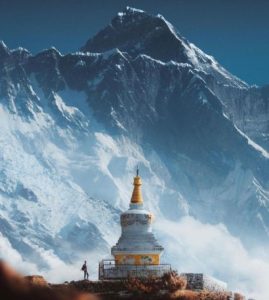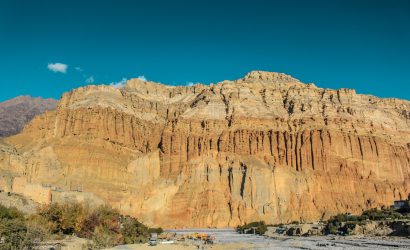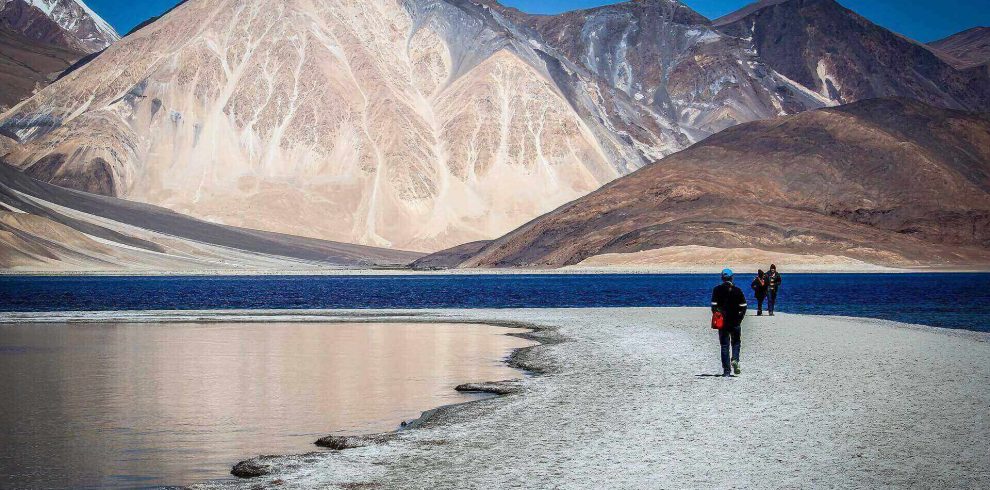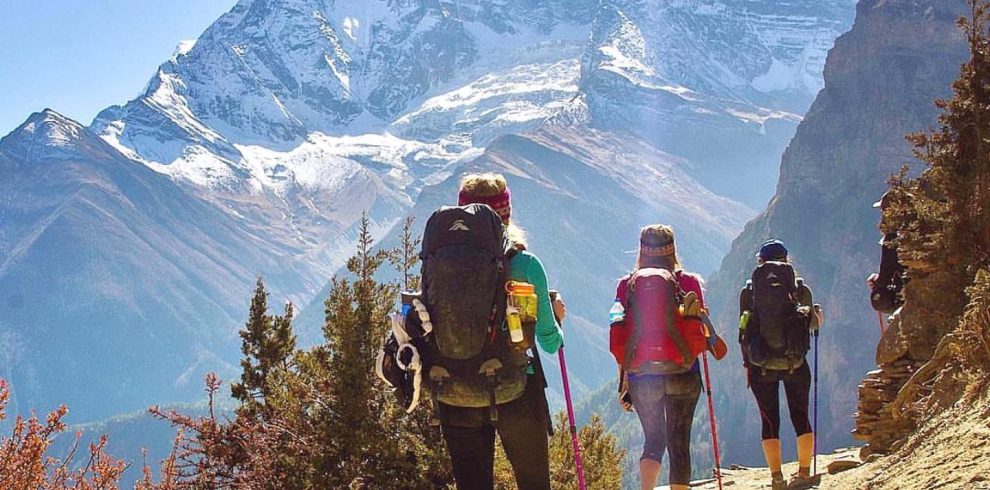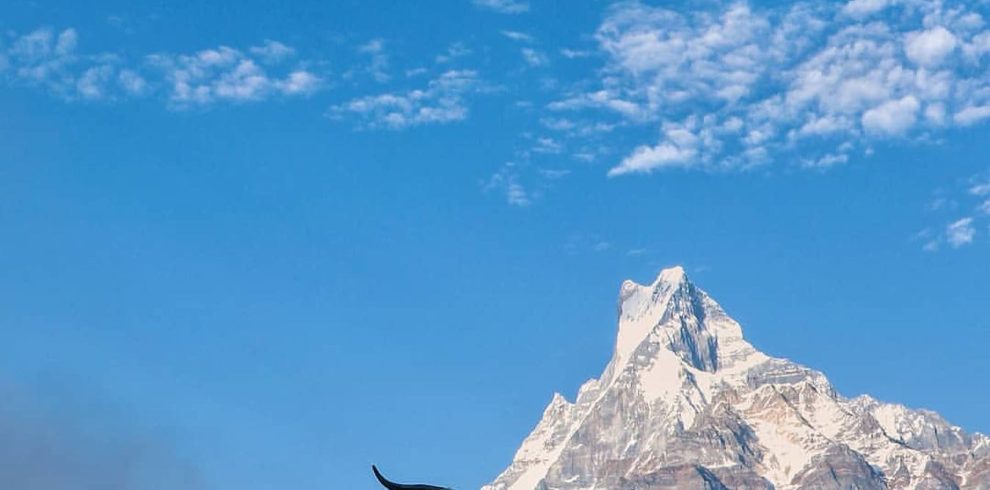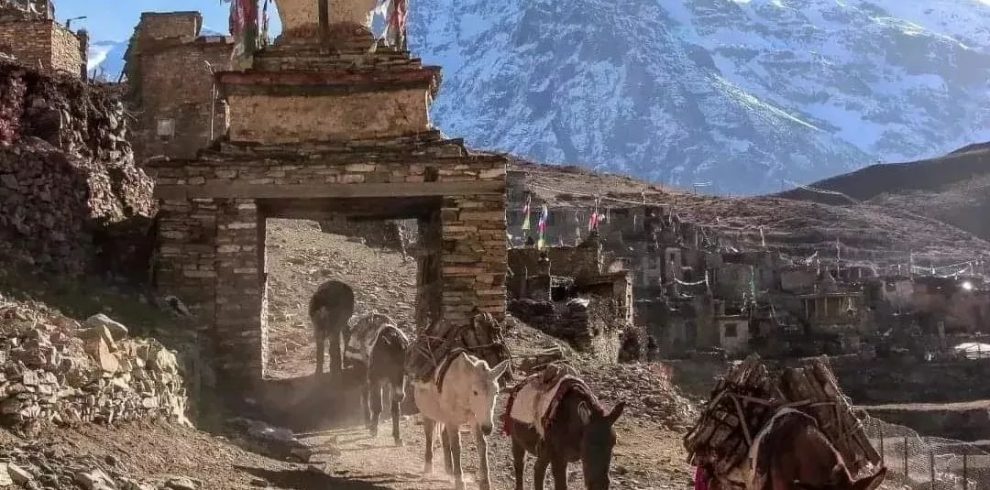
The Nar Phu Valley Trek is a well-kept secret tucked away in the Himalayas, ready for explorers to discover. Distant from the crowded paths of well-known hikes in Nepal, this hidden gem provides a delightful mix of untouched natural splendor, ancient Tibetan traditions, and an unmatched feeling of peace. Nar and Phu are two separate valleys located in the Annapurna region. The path leads to remote and undiscovered regions of Nar Phu Valley, offering an excellent vantage point for viewing the Himalayan peaks in the highlands.
The valley is satisfying and likely the most sought-after trekking spot in the world because of its towering peaks and passes, glaciers, isolated communities, narrow gorges, beautiful forests, stunning rock formations, yaks, high-altitude meadows, Buddhist monasteries, and rich Tibetan traditions all combined in one place. During this 15-day trek, the highest point we reach is 5320 meters above sea level. Nar Phu Valley’s primary attraction lies in its breathtaking panoramas of Mt Manaslu (8163 m), Mt Dhaulagiri (8167 m), Mt Annapurna I (8091 m), and over 19 snow-covered peaks in the Annapurna area. You just hike on the stunning landscape while admiring the lovely scenery and immersing yourself in the native traditions.
Hikers are attracted to the mountain lifestyle due to its unspoiled beauty, indigenous communities, and deep historical roots. The summer and winter villages of the Highlanders, along with their beautiful grazing meadows, are the standout attractions of our journey.
Upon stepping onto the Nar Phu Valley trail, a feeling of excitement pervades the atmosphere. Get ready to be captivated as you embark on your journey and observe the gradual transformations in the environment – from verdant valleys to dry desert landscapes. As you journey through the lower area, you will pass by lush forests with cascading waterfalls and unique plant life. Moving further, the upper area will showcase steep gorges, dramatic cliffs, and rough terrains that create an ever-evolving landscape captivating every moment of your adventure. Similarly, the faraway noise of running rivers brings a peaceful atmosphere to your journey as you venture further into this secret haven.
This trekking package could be the top choice for those who are ready to explore one of the most isolated areas of the Himalayas. The landscape bears a striking similarity to Tibet, featuring rugged trails. The colorful villages decorated with Buddhist prayer flags provide a peek into the lively culture and tradition of residents unaffected by time. Therefore, if you are looking for a less congested hiking path, Nar Phu Valley Trek is the best choice.
Highlights of the Nar Phu Trek
- Explore the less ventured areas of the Annapurna region.
- Explore the eco-tourism destination of Annapurna by going for a walk.
- Breathtaking scenery of Annapurna Range, Mount Manaslu, Dhaulagiri, Annapurna II, Himlung Himal, Gangapurna, and Tilicho Peak.
- Kang-La Pass is a high mountain pass measuring 5,322 meters in elevation.
- Beautiful Buddhist monasteries and Tibetan settlements.
- Experience the unchanged authenticity of historic traditional villages.
- Incredible exploration of the unspoiled communities in Nar and Phu
- Discover the Tibetan plateau as it stretches into Nepal and experience the culture stemming from Tibet.
- Experience the colorful prayer stones’ enchanting beauty and a distinctive monastery stay.
Detailed Itinerary of Nar Phu Valley Trek:
Day 1: Arrive in Kathmandu:
On your arrival at Tribhuwan International Airport, you will be received by our pleasant consultant, who will drop you off at your hotel in the Thamel district. After getting comfortable, you can begin with an off-foot excursion in Thamel, exploring its busy markets and coming across unique stores. Thamel is known for its shops and avenue carriers, who provide everything from trekking equipment to handicraft miniatures, rings, electronics, and plenty more Apart from shops, Thamel offers a wide variety of restaurants that cater to quite a few tastes. You will have a welcome dinner at night along with our representative, who will brief you regarding the tour.
Note:- We will collect your passport and photos when we brief you to get the Nar Phu Valley Special Permit. However, if you arrive late, the discussion session will be postponed to the following day and the passport will be handed over then.
Day 2: Kathmandu Sightseeing and Trek Preparations
Visiting two of the holiest sites in Kathmandu, the Pashupatinath Temple and the Boudhanath Stupa, considered World Heritage Sites by UNESCO, their buildings form a very strong part of the cultural and religious traditions in the country.
Dedicated of Lord Shiva, Pashupatinath happens to be one of the holiest Hindu pilgrimage sites. You will get to see the colorful religious rituals, look at the Sadhus (Hindu holy men), and marvel at the intricate architecture of this massive Buddhist stupa, which is one of the principal landmarks of Kathmandu. You will feel the serenity in the air and have the chance to explore the surrounding Tibetan marketplace, learning more about Buddhist traditions.
Following the sightseeing tour, you will come back to Thamel to manage your final preparations for the hike across Nar Phu Valley. This will involve gear preparations, some last-minute purchases, and getting rested during the night before you make your adventure.
Important Note: Kathmandu Valley boasts seven UNESCO World Heritage Sites. If you have extra time, consider visiting other sites like Swayambhunath Stupa, Kathmandu Durbar Square, Patan Durbar Square, Bhaktapur Durbar Square, and Changunarayan Temple.
Tomorrow, you’ll embark on a thrilling adventure into the remote Nar Phu Valley.
Day 3: Drive to Besisahar – Gateway to the Nar Phu Valley
Today, you start the Nar Phu Valley trek, leaving behind the busy city of Kathmandu and taking a scenic drive to Besisahar. That will be the starting point for this remote and pristine region. You will have a good breakfast at your hotel in Kathmandu, and then you will depart for the bus station. From there, get aboard in a comfortable vehicle to take you to Besisahar.
While driving to Besisahar, the scenery of Nepalese villages will enchant your eyes. You will cross green valleys, terraced farmlands, and nice villages. Two major rivers—the Trishuli and the Marshyangdi—will keep you company during this journey.
After about 6-7 hours, you will be in Besisahar, a town full of activities and the starting point for most trekking in the Annapurna region. You can stroll around the local market, interact with the warm-hearted locals, or spend some time at leisure at your guesthouse.
Overnight stay at a comfortable guesthouse in Besisahar. Enjoy a delicious dinner and a good night’s rest for the wonderful trek awaiting you the following day.
Tomorrow, you will start the long, tiring, but beautiful journey towards Nar Phu Valley.
Day 4: Drive to Koto—Gateway to the Nar Phu Valley
A picturesque drive today from Beshisahar to Koto, the point from where your trek into the Nar Phu Valley begins. All along the road, there are tantalizing views of the Annapurna and Manaslu ranges of mountains.
After having a successful breakfast, be prepared to leave Besisahar and start your drive toward Koto. It is about a 6 to 7 hours drive, going through some beautiful villages with terraced farmlands.
Along your drive, you will enjoy magnificent views of Annapurna and Manaslu mountain ranges. Driving by a few settlements, you come across Jagat, Chamje, Dharapani, Bagarchhap, Timang, and Thanchock. Keep an eye out for the grand view of the Annapurna I Peak and the Lamjung Himal.
Upon arrival at Koto, check into a local guesthouse. This beautiful village of Gurung land is the local sauce of culture and lifestyle. Enjoy some time wandering about the village and meeting the locals.
Relax tonight in Koto, for tomorrow you test yourself on the difficult and invigorating section. Tomorrow you leave the comfort of the road behind as you venture into the far-flung areas of the Nar Phu Valley.
Get a good night’s rest, because the following days are walking thoroughly in great landscapes.
Day 5: Meta Trek – Entering the Nar Phu Valley
The day begins by entering totally remote and pristine Nar Phu Valley. Today’s trail is demanding, but the views of the surrounding mountains and insight into local culture make it highly rewarding. After a filling breakfast, you will leave Koto and begin the trek towards Meta. The trail drops initially along a steep, but refreshing, ascent through dense forests, passing from the lower elevations. As you go higher and higher, you will meet the Marshyangdi River. A suspension bridge will let you cross over to the other side, where the trail keeps going uphill.
So after crossing the river, you officially enter into the Nar Phu Valley. The general landscape starts changing with forests becoming sparser and mountains more prominent. You pass by some very nice villages that give you a peek into the local Sherpa and Gurung culture. Now the final and steep climb begins to Meta. The village welcomes you with fantastic views of the range of Annapurna and Lamjung Himal, which it offers from itself. As far as your eyes can see, the remoteness of Meta provides an opportunity to experience the tranquility of the Himalayas.
Stay overnight in Meta’s guesthouse to feel the basic luxuries of life in the mountains. The clear night sky displays its image in front of you with glittering stars, giving an opportunity to relate with nature.
The next day, journey deeper into the Nar Phu Valley among remote villages, experiences, and culture. Get some rest tonight because, for the next few days, it’s going to be real challenging yet rewarding.
Day 6: Koto to Kyang – Further into the Nar Phu Valley
You will explore the further reaches of this valley today by climbing higher up to the settlement of Kyang. These trails view some fantastic mountains and give a glimpse into the traditional Sherpa culture. After a good breakfast, you’ll depart Koto and begin your trek to Kyang. Starting out, the day is peaceful and serene, following a river right from Koto. As the altitude increases, the path becomes increasingly steep and thus tiring. You will pass through rich forests and villages of typical Sherpa houses on your way.
Across a suspension bridge lies the small hamlet of Chyaku, which offers some respite from the grueling uphill climb. From here, you can view what is around—a sight of the mountains around you—effectively an introduction to why this trek is so famous. The last uphill climb to Kyang is rewarded with such sweeping panoramic views of the Annapurna and Manaslu mountain ranges. It is a glimpse of how people live in such remote mountain locations, in stone houses warmed by warm locals.
Stay overnight at the local guesthouse in Kyang and feel the serenity of this off-beat village. The following morning, you will make your way to Phu Gaon, which is centrally located in Nar Phu Valley. Take a good night’s rest; the following morning, the climb goes up further. Remember to acclimatize properly and enjoy the stunning scenery.
Day 7: Phu Gaon – In the Heart of the Nar Phu Valley
Today, attend one of the more demanding but beautiful treks to Phu Gaon, lying in the heart of the Nar Phu Valley. It is one of those remote villages that offer a very few opportunities to witness the original culture of the Sherpas and Tibetans.
Next, after a good breakfast at Kyang, you will start an uphill hike towards Phu Gaon. The path is pretty rough and breathtaking views of the surrounding peaks are at your disposal.
Nar Phu Valley happens to be a habitat for the elusive blue sheep; hence, keep eyes for them. The pristine environment of the valley offers habitat to various types of wildlife, and therefore, it is a place that any nature enthusiast would love to pass through.
Further down the path, crossing the Phu Khola River, you’ll reach the village of Phu Gaon. This beautiful village gives a glimpse into the traditional habits and living of Sherpas and Tibetans. The village enjoys magnificent views of the Annapurna and Manaslu mountain ranges.
Spend some time roaming around the village, where you get an opportunity to visit the Tashi Lhakhang Monastery. Meet and speak to friendly villagers, and try to get an insight into the culture and tradition of the locals. The serenity of this place offers the proper time required for rest and rejuvenation.
Stay overnight in the local guesthouse at Phu Gaon. Enjoy simple luxuries of mountain life and soak in the surrounding beautiful landscape.
Next comes a rest day at Phu Gaon for acclimatization, and you can explore the surrounding area.
Take good rest; it’s going to be another overnight stay at this lovely village.
Day 8: Acclimatization Day in Phu Gaon
The day is devoted to acclimatization, frolicking, and enjoying the beauty of Phu Gaon, a picturesque village. You can immerse yourself in the local culture, check out the monasteries, which are hundreds of years old, and simply get thrilled by the views of the surrounding mountains.
Staying a day at this elevation will let your body adjust to the thin air. Otherwise, it might suffer from altitude sickness.
Wander along the narrow lanes of Phu Gaon, with characteristic stone houses and warm, friendly locals. This is the location of a monastery which apart from being a place of worship is also culturally significant for the region. You could also visit some nearby caves that shed light on the geological history of this region.
For those who have an adventurous streak, a day hike to the Himlung Base Camp awaits. This strenuous hike commands an amazing panorama of the surrounding mountain ranges, which includes the Annapurna I and Manaslu. Consult with your guide or better, assess your fitness conditions before engaging in this hike.
Spend the remaining time of the day at your leisure at your guesthouse and feel the serenity of Phu Gaon. Local delicacies and sharing of experiences with other trekkers are also available in the camp.
Next, you will start your descent toward lower altitudes with a view of the diversified landscapes of Nar Phu Valley.
Keep hydrated; save your skin from the sun. Give your body a good chance to acclimate.
Day 9: Descent to Nar Phedi
You will continue downwards towards Nar Phedi today, which gives you a different view altogether of the Nar Phu Valley. The trail winds around some really beautiful villages and terraced farmlands, giving one a feel for how these people really live.
After a nourishing breakfast, you’ll leave Phu Gaon. Then, start your way down toward Nar Phedi. The trail overlooks first in the same way you took during the ascent, with familiar views of the surrounding mountains, still captivating.
After several hours of walking, you will arrive in the small village of Nar Phedi, off the beaten track and surrounded by mountains, giving you the opportunity to relax in its quiet atmosphere and recover from the previous days’ hikes.
Stay at a local guesthouse in Nar Phedi and enjoy mountain life’s simple pleasures. The next day, you will continue down finally to pass towards the main Annapurna Circuit trail to Besisahar.
Get some good sleep as you are going to cover quite a distance tomorrow.
The next day is the final descent of Nar Phu Valley trek where you will drop to lower altitudes and finally meet up with the Annapurna Circuit trail.
Day 10: Explore Nar Village
This day you will spend exploring the village of Nar and soaking in the culture. You can spend your day moving around the narrow alleys of the village, witnessing the traditional stone houses and friendly people. Observe the local monastery, a hub of worship and culture. You can explore its surroundings also, depicting the brilliant view of mountains.
Spend the day at your guesthouse, relaxing and acclimatizing to the altitude. Soak in the serene atmosphere of Nar Village and indulge in local food. Next up, a tough but rewarding day as you tackle a trek over the Kang La Pass, the crowning glory of your Nar Phu Valley adventure. Get a good night’s sleep, as tomorrow shall be a tough day.
Day 11: Cross Kang La pass to Ngawal
Today is one of the toughest days of this trek, but also one of the most exhilarating. You will cross over the Kang La Pass, which links the Nar Phu Valley with the Annapurna Circuit; of course, one of the major highlights of this journey is the breathtaking panoramic views of the Himalayas.
After a hearty breakfast, you will leave Nar and start the ascent towards Kang La Pass. Though the trail is steep and demanding, the payoffs are huge.
You will pass through the pasture areas of the yaks as you keep going upwards, with constant stunning appearances of mountain vistas on the way. It is quite demanding in the final climb to the pass, but it pays off with a view of the panoramic views of both the Annapurna and Manaslu mountain ranges.
The next camp is crossing the Kang La Pass and starting the downward journey towards Ngawal. The trail goes steeply down, which is rocky; the stunning views are smoothened by giving more than a few reasons to continue. You will pass by some Sherpa villages where, once again, you could be greeted as guests and enjoy some warm hospitality from the locals.
On reaching Ngawal, expect breathtaking views of the Annapurna range and the Manang Valley. This village offers serenity and peace and is an excellent opportunity to rest one’s back from the strenuous trek.
Spend the night at a local guesthouse in Ngawal and enjoy the simple comforts of mountain life. You continue the next day towards Manang sidetracking on the Annapurna Circuit trail.
Get some good rest, for tomorrow you have a long way to go. Remember to acclimatize properly and enjoy the fine views.
Day 12: Descent to Chame
Although this is a day of leaving the isolated Nar Phu Valley and joining up with the popular Annapurna Circuit trail, it does guarantee some tremendous views of the Annapurna and Manaslu ranges as far as the eye can see as you drop down to Chame. After breakfast, you will leave Ngawal and start the gradual and long descent towards Chame. The trail follows the Marshyangdi River initially and passes through terraced farmlands and traditional villages.
On the way down, you will pass by the views from the Annapurna Circuit, Gyaru and Pisang. More than that, this trail has great views of Gangapurna, Tilicho Peak, Lamjung Himal, and Annapurna II and III. After several hours of hiking, you will reach Chame, a busy town and the administrative center of the Manang district. You can use this time to visit the local market, socialize with friendly locals, or just relax at your guesthouse.
Stay overnight at a guesthouse in Chame, refreshing yourself with amenities not usually found in smaller villages. You can toast completing your Nar Phu Valley trek with fellow trekkers. Tomorrow you’ll further your way along the Annapurna Circuit and probe into the popular route for trekking and outstanding atmosphere.
Good night; you will need to cover quite a distance tomorrow.
Day 13: Drive Back to Besisahar
This is your last day of the Nar Phu Valley trek. You are going to leave the mountain region to come back to the lowlands. You will be served a warm breakfast, then you will depart from Chame. The drive downwards to lower altitudes is full of scenic beauty with the views of the Annapurna range at your side.
The drive lasts around 6-7 hours with some beautiful villages and terraced farmland along the way. You will recognize the views of Koto, Thanchok, and Timang. Reaching Besisahar, you get accommodated in the guesthouse, where you have the chance to unwind and let the experiences of your Nar Phu Valley trip sink in. You can spend the rest of the time exploring the town’s different restaurants and shops.
It’s time to spend your last night in Nepal at Besisahar, indulging in the comfort of a town after days in these tiny mountain villages. From here, the final journey drive back to Kathmandu begins tomorrow. Take a good night’s rest and then bid a fond farewell to Nepal tomorrow.
Day 14: Return to Kathmandu
This is the final day of the Nar Phu Valley trek, and you will be leaving the mountains to return to the busy city of Kathmandu. Have a leisurely breakfast before driving back to Kathmandu. The drive takes around 6-7 hours, and there are a lot of nice countryside views that will give you ample scope to reflect on your great adventure.
Upon arrival in Kathmandu, check into the hotel; the remaining time is for leisure or to explore the city. You either spend your time sightseeing or shopping, or just relax after your tiring trek. You can arrange a farewell dinner with your fellow group of trekkers to enjoy a celebratory dinner to mark the end of the Nar Phu Valley trek successfully.
This is goodbye to Nar Phu Valley. You will take with you unforgettable memories of the scenic landscapes, warm hospitality, and unique cultural experiences.
Day 15: Departure from Kathmandu
Your magical Himalayan journey ends today. Have a relaxed breakfast at your hotel and relish the last bit of your stay in Nepal. Approximately 3 hours before your flight, your guide will assist you with the transfer to Tribhuvan International Airport. Check-in for your flight and complete the formalities for departure. As you board, reflect upon the wonderful experiences you’ve had on the trek.
You will start your journey back home with a heart enriched with memories. The scenic landscapes, warm hospitality, and rich cultural experience of Nepal will never leave your memory.
Bon Voyage!
Includes
- Private transfer from the airport to the hotel and back to the airport.
- 3 nights in Kathmandu with double occupancy in a 3-star hotel.
- Breakfast is served every day at the hotel in Kathmandu.
- Sightseeing in Kathmandu will be guided according to the provided itinerary.
- Private vehicles will be used for all ground transportation during the sightseeing tours.
- Transfer from Kathmandu to Besishar using a scheduled local bus.
- Transfer from Besishahar to Kyoto in a shared local jeep on a scheduled basis.
- Fees for obtaining a special permit for the Nar-Phu Valley.
- Fees for Annapurna Conservation and TIMS are required.
- All food – Morning Meal, Midday Meal & Evening Meal
- Top Local Guest House/Tea House Options
- A knowledgeable leader and a necessary amount of porters based on the size of the group.
- Payment for things like food, lodging, transportation, insurance, and gear for guides and porters are included in the wages.
- A Large Medical and First Aid Kit
- Trekking gear includes items that can be refunded, such as a down jacket, duffle bag, sleeping bag, and poles.
- Every single tax
Not Includes
- Airfares and Taxes on a Global Scale
- Clothing and gear for individual use
- Individual costs such as drinks, cleaning clothes, making telephone calls, and more.
- Showing appreciation for the guide, porters, and driver with tips or gestures of thanks.
- Any additional services and activities not specified or incorporated.
- Lunch and dinner meals in Kathmandu, excluding those during treks.
- Insurance for traveling
- Any expenses arise from adverse situations like landslides, inclement weather, flight disruptions, and so on.
- Any item not listed in the included section